
When it’s time to replace your windows, style is about a lot more than looks. The type of window you choose determines how your home ventilates, how much natural light each room receives, how easy your windows are to clean and operate, and how well they seal against the elements. With so many options available, it’s a good idea to know what sets each style apart before you decide.
Casement windows are one of the most popular choices on the market – but are they the right choice for every room in your home? How do they stack up against double-hung windows, picture windows, and other styles? Let’s take a close look at how casement windows compare to the alternatives so you can make the right decision for your home renovation.
What are casement windows?
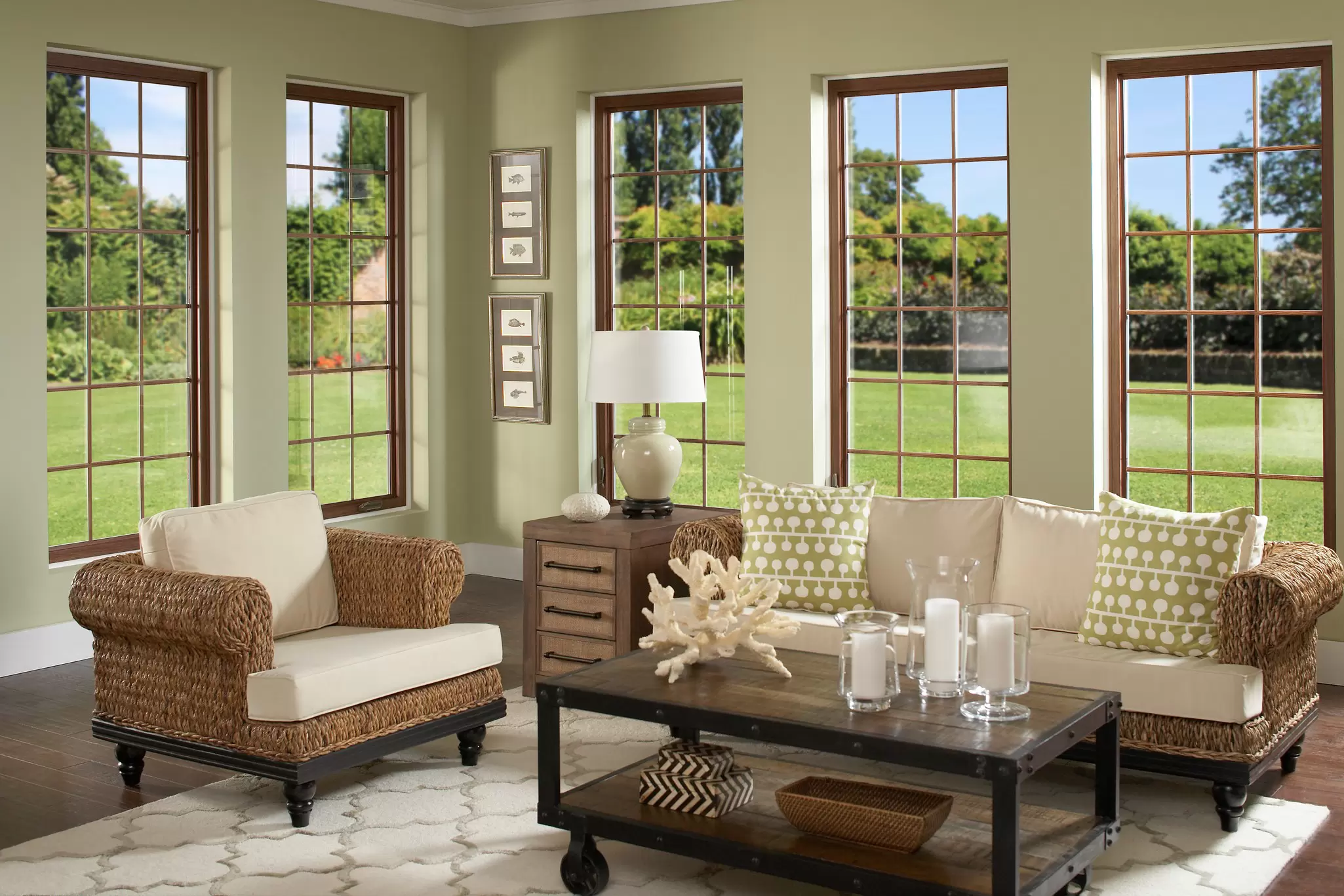
Casement windows are hinged on one side – either the left or the right – and swing outward when opened, like a door. They’re usually operated by a crank handle located at the base of the window frame, making them easy to open and close with a simple turn, even in hard-to-reach spots.
Because the entire sash swings open, casement windows offer excellent ventilation. The outward-opening design acts almost like a scoop, directing outdoor air into the room rather than just allowing passive airflow. When closed, the sash presses firmly against the frame on all sides, creating a tight seal that makes casement windows among the most energy-efficient operable window styles available.
Casement windows are typically taller than they are wide, and they work well across a range of architectural styles, from traditional to contemporary. They’re also available in a variety of frame materials, glass packages, and hardware finishes, giving homeowners plenty of flexibility in terms of both performance and appearance.
How do casement windows compare to other window types?
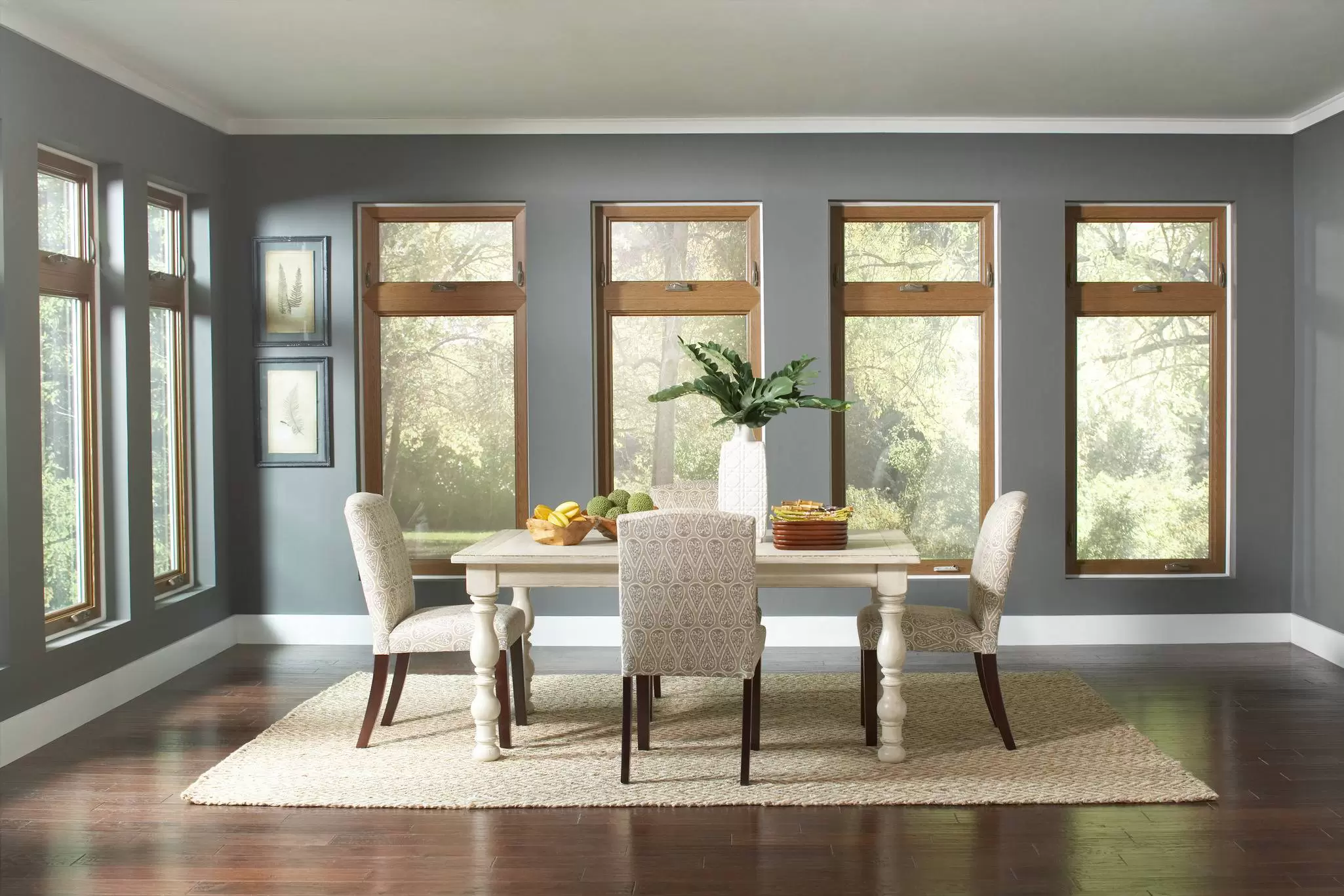
Every window style has its strengths, and the ideal choice depends on where the window is going, how you want it to function, and what you’re willing to invest. Here’s how casement windows measure up against the most common alternatives.
Casement windows vs. double-hung windows
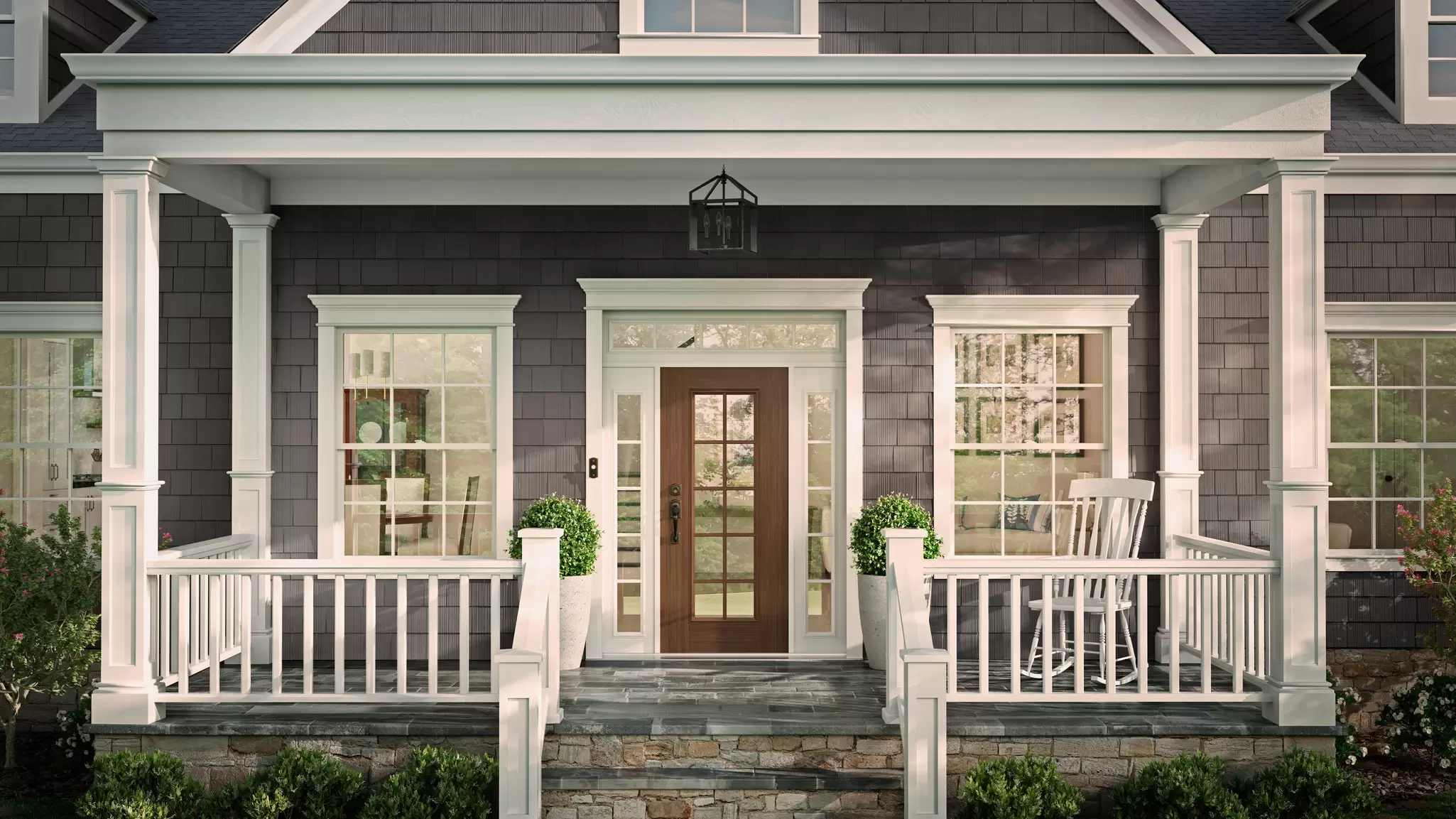
Double-hung windows are probably the most familiar window style in American homes. They feature two sashes – an upper and a lower – that both slide vertically within the frame. Either sash can be opened independently, and many double-hung windows tilt inward for easy cleaning from inside the home.
Casement windows and double-hung windows are both excellent choices, but they serve slightly different needs:
- When it comes to ventilation, casement windows have an edge – the full sash opens outward, catching and channeling the breeze more effectively than a partially open double-hung. Double-hung windows, on the other hand, offer more flexibility in controlling airflow: you can open the top, the bottom, or both, which allows warm air to escape from the top while cooler air enters from below.
- For energy efficiency, casement windows typically perform slightly better because the sash compresses against the frame on all four sides when closed, leaving less opportunity for air leakage.
- Cleaning is another area where the two styles differ. Double-hung windows with tilt-in sashes can be cleaned from inside your home, which is very convenient (especially on upper floors). Casement windows require cleaning the exterior glass from outside, which can be less practical on second-story installations.
- In terms of cost, double-hung windows are generally more affordable than casement windows, both for the window unit itself and for installation. For homeowners working with a tighter budget or replacing a large number of windows at once, that difference can add up.
Casement windows vs. single-hung windows
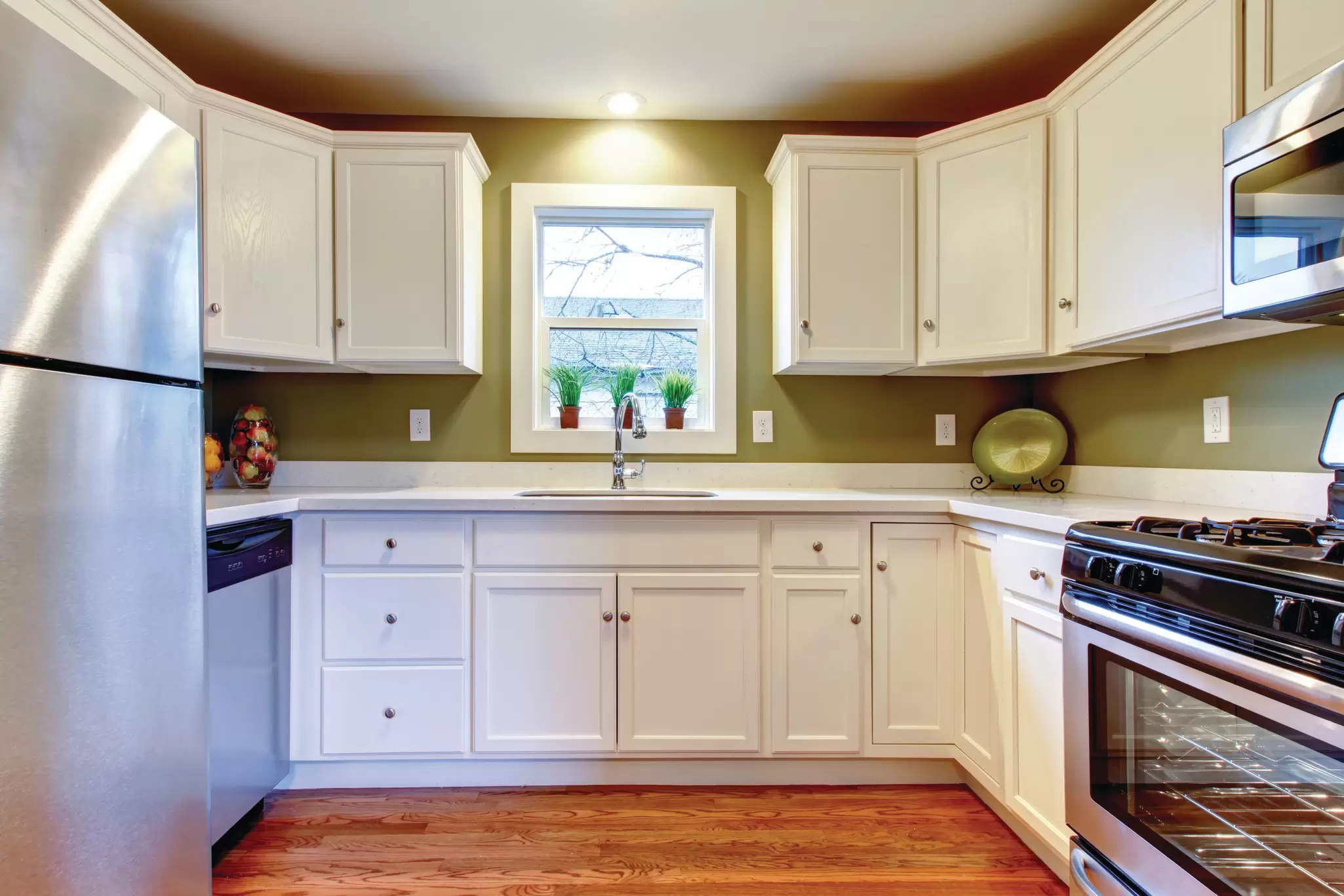
Single-hung windows look nearly identical to double-hung windows from the outside, but only the lower sash moves; the upper sash is fixed in place. They’re among the most affordable window styles available, making them a popular choice for budget-conscious projects and rooms where ventilation isn’t a top priority.
Compared to casement windows:
- Single-hung windows offer less ventilation flexibility and slightly lower energy performance, since only half the window opens. They also don’t typically tilt inward for cleaning, so exterior surfaces need to be cleaned from the outside.
- Where single-hung windows shine is in straightforward, cost-effective replacement situations. If you’re replacing a bedroom window you open occasionally or a basement window where the primary concern is light rather than airflow, a single-hung window is a practical and affordable solution.
- For rooms where you want maximum ventilation and a tighter seal, casement is the stronger performer.
Casement windows vs. sliding windows
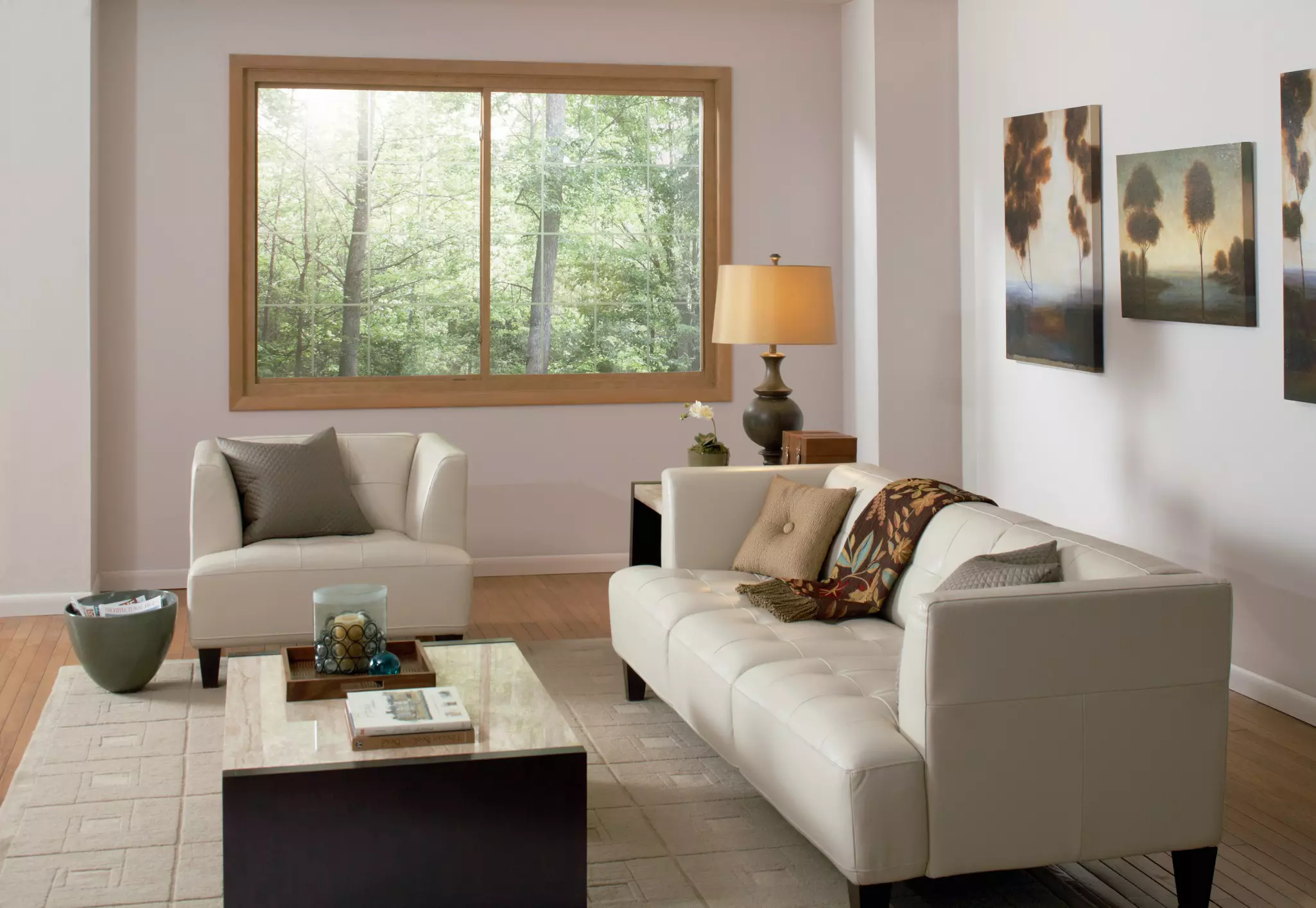
Sliding windows operate on a horizontal track, with one or more sashes that glide left and right rather than opening outward or sliding vertically. They’re a popular choice for wider openings where a tall, narrow window wouldn’t be proportionally appropriate, and they work well in contemporary home designs. Here’s how they compare to casement windows:
- A sliding window can only open half of its total width at any given time, since one sash is always stationary. A casement window, by contrast, opens the entire sash outward, making it more effective at capturing and directing airflow.
- Casement windows also offer better energy efficiency for the same reason they outperform double-hung windows: The outward-pressing seal is tighter than the sliding track mechanism.
- That said, sliding windows don’t require exterior clearance for an outward-swinging sash, which makes them a better fit for areas like patios, walkways, or landscaped spaces where an opening casement might be obstructed or get in the way.
Casement windows vs. picture windows
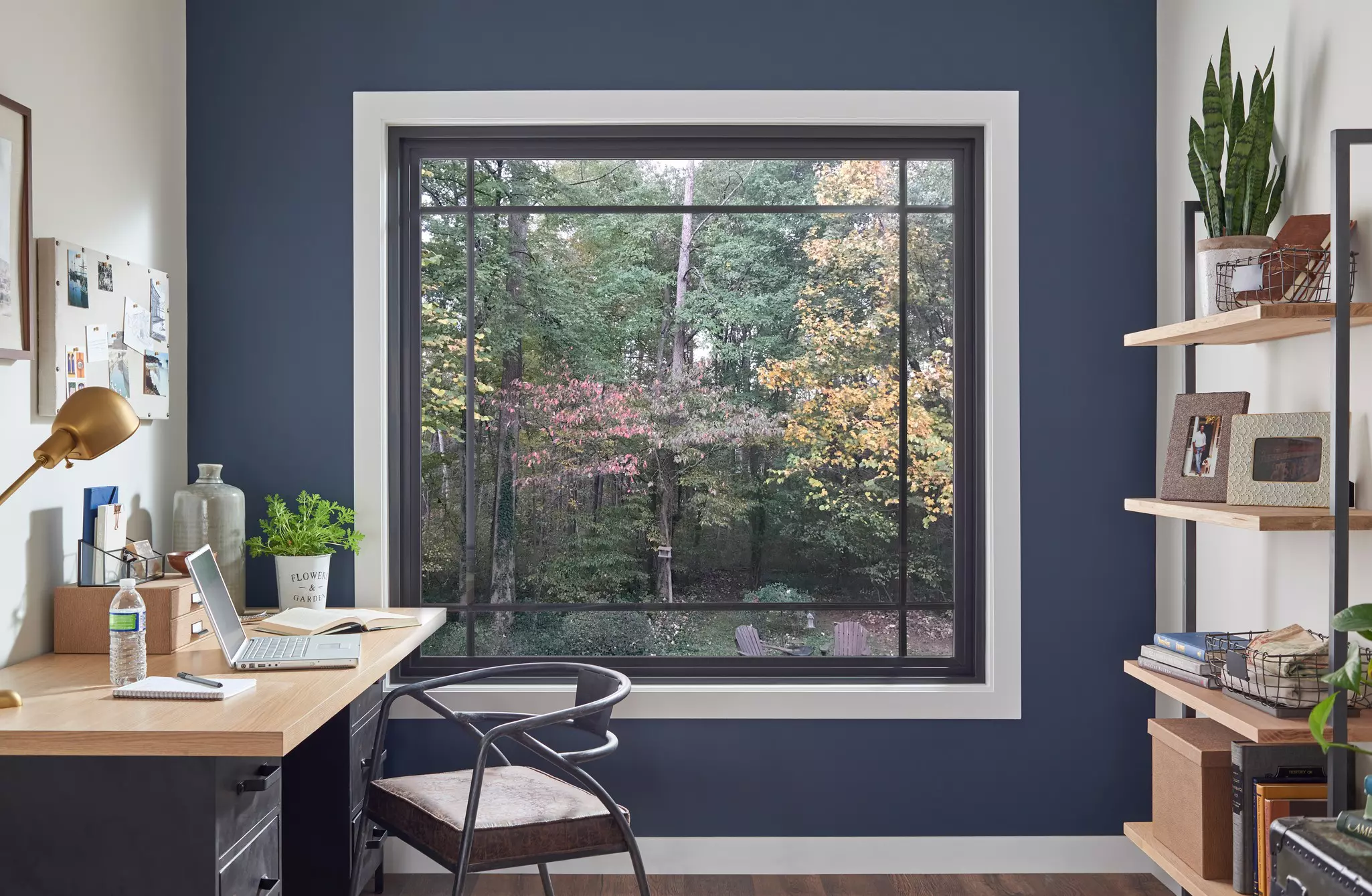
Picture windows are fixed – they don’t open at all. They’re designed purely to frame a view, flood a room with natural light, and create a clean, unobstructed visual connection to the outdoors. As for how they stack up:
- Without any operating hardware, sash mechanisms, or weatherstripping wear points, picture windows are among the most energy-efficient and lowest-maintenance options available.
- The trade-off, of course, is ventilation. A picture window brings all the light and views you could want but none of the fresh air.
- In living rooms, great rooms, and any space where you want to showcase a view, picture windows are hard to beat.
- Where ventilation matters, casement wins outright.
Awning windows vs. casement windows
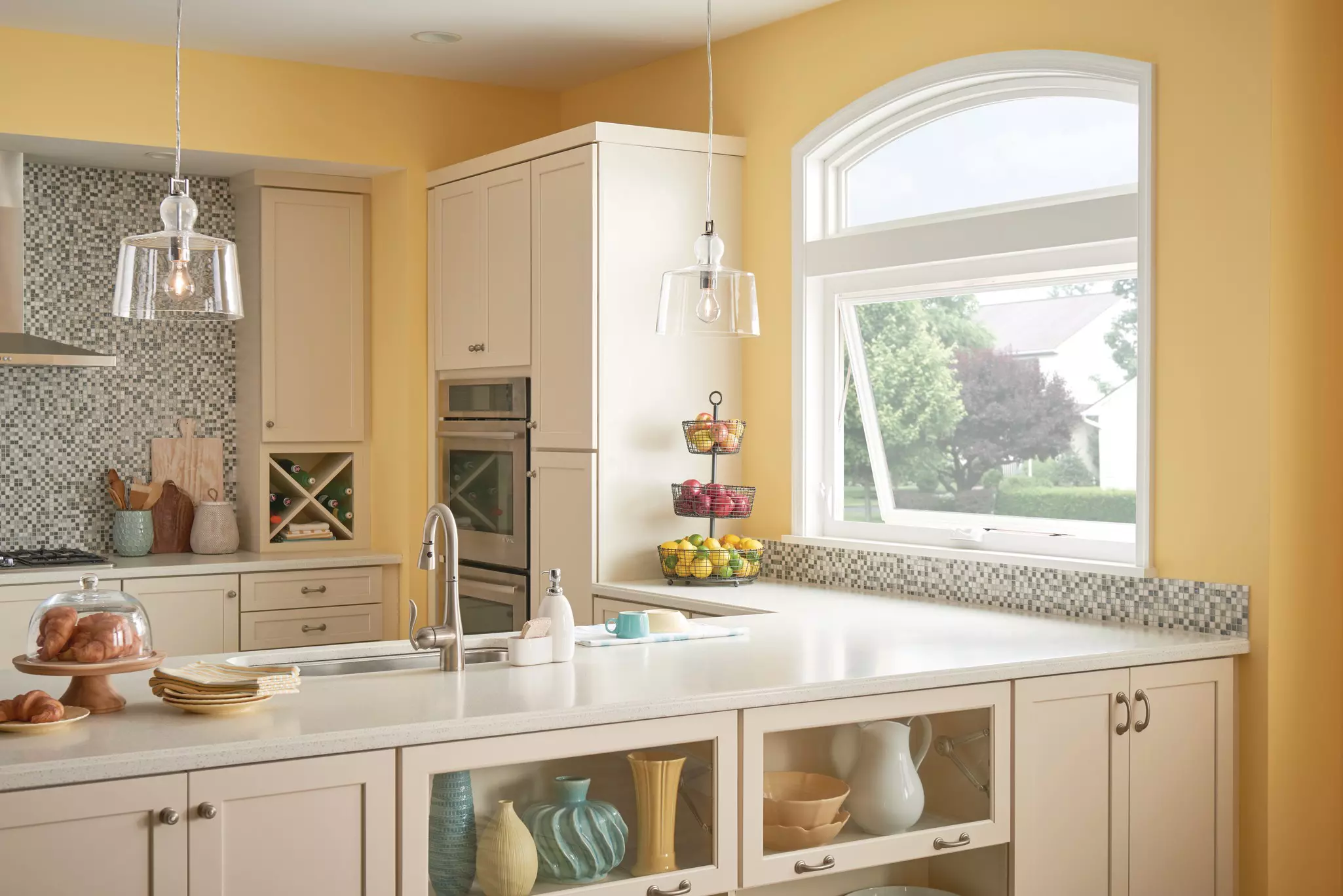
Awning windows are casement windows’ close cousin. They operate on the same crank-and-hinge principle, but with one key difference: Awning windows are hinged at the top rather than the side, and they swing outward from the bottom. This creates an awning-like overhang when open, which is where the name comes from.
- That top-hinged design gives awning windows a practical advantage that casement windows don’t share: They can remain open during light rain without letting water into the home. The outward-angled sash deflects raindrops away from the opening, making awning windows a great choice for climates – like the Gulf Coast’s – where afternoon showers can arrive without much warning.
- Both styles offer excellent energy efficiency and strong ventilation, and they’re often used together in the same installation. One common pairing places a fixed picture window in the center with awning or casement windows on either side or below, combining maximum light with practical airflow.
- The choice between awning and casement often comes down to placement: awning windows work especially well in bathrooms, basements, and any space where you want ventilation without worrying about the weather.
Where should you use casement windows in your home?
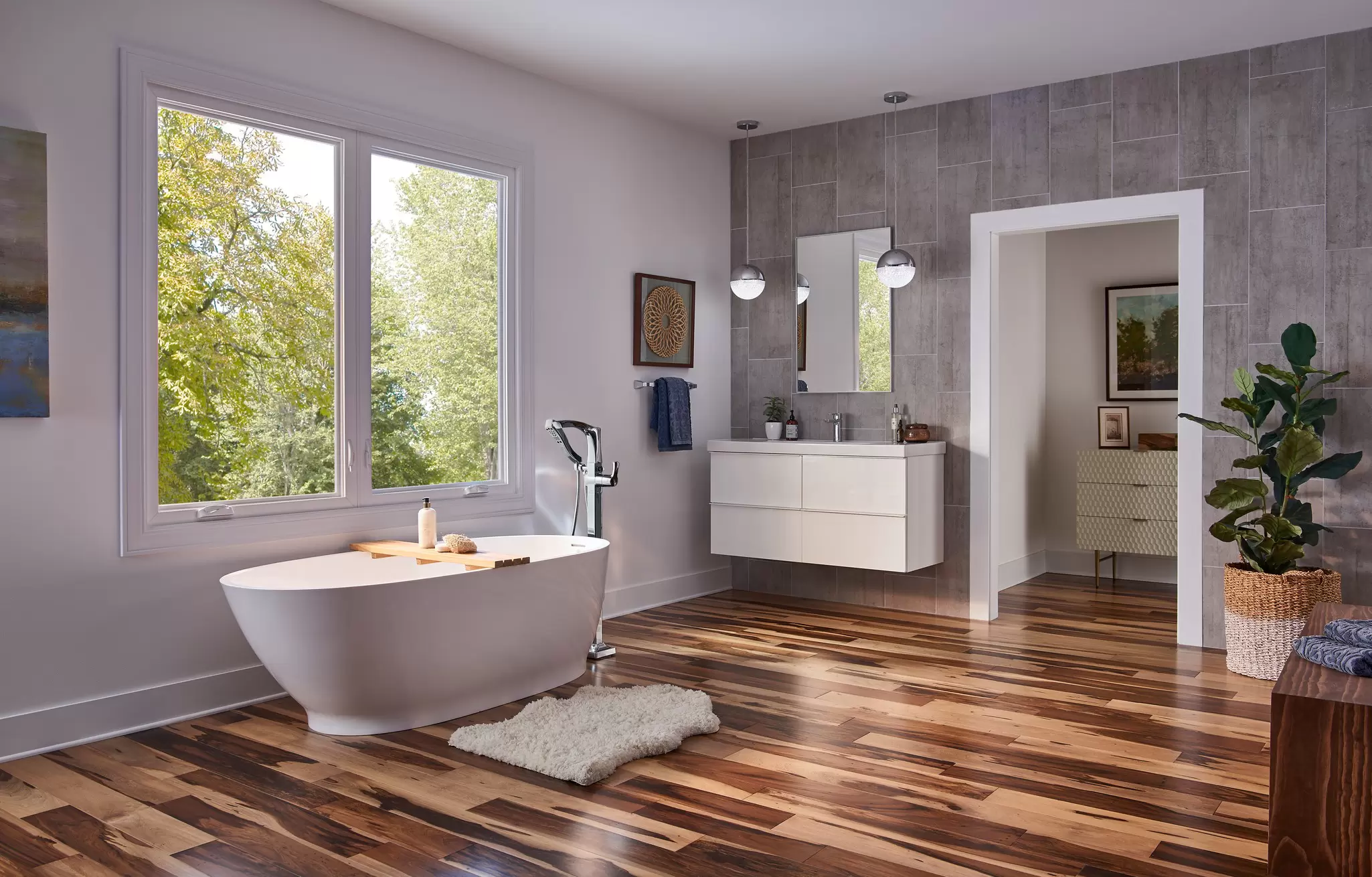
Understanding how casement windows compare to other styles is useful, but knowing where to put them is where the real decision-making happens. Casement windows aren’t the right fit for every opening, but for certain spots in the home, they’re the ideal choice. Here are a few examples:
- Above counters and sinks. The crank handle operation that defines casement windows is a genuine advantage in spots where reaching across a surface to push up a sash simply isn’t practical. The kitchen sink is the classic example – a casement window above the sink can be opened with a single turn of the crank without requiring you to lean over the counter or dishwasher. The same logic applies to bathroom vanities or laundry areas.
- Rooms where ventilation is a priority. Bedrooms, home offices, and living spaces that you want to keep naturally cool and fresh are great candidates for casement windows. Their full-sash opening and directional airflow make them the most ventilation-efficient operable window style available.
- Openings that are taller than they are wide. Casement windows are naturally proportioned for tall, narrow openings, which are a common feature in traditional, craftsman, and cottage-style homes in southern Alabama. If your home has these kinds of openings, casement windows fit both aesthetically and functionally.
- Paired with picture windows. Casement windows work beautifully alongside these fixed windows since the combination gives you an expansive, light-filled wall of glass while still providing the ventilation and fresh air that a picture window alone can’t deliver.
- Hard-to-reach locations. Any window that’s difficult to access – whether it’s high on a wall, tucked behind furniture, or in a tight corner – benefits from the crank mechanism that casement windows offer. A few turns of the handle open the window fully without the awkward reaching required by other styles.
How do casement windows compare on cost?

Cost is a practical consideration for any window replacement project, and casement windows do typically carry a higher price than some of the alternatives – particularly single-hung and double-hung windows. The difference comes down to the added complexity of the casement’s operating mechanism: the hinge system, crank hardware, and multi-point locking system all add to the manufacturing cost compared to a simpler sliding or single-hung window.
On average, casement windows tend to cost somewhat more per window than double-hung windows of comparable size and quality (usually anywhere between $400 and $2,400 per window). The exact difference varies depending on the brand, frame material, and glass package you choose.
That said, the higher upfront cost of casement windows comes with real performance benefits that justify the investment in the right situations. For instance:
- Their tighter seal translates to better energy efficiency, which means lower energy bills over time
- Their full-sash ventilation reduces reliance on air conditioning during mild Gulf Coast weather
- Their clean, contemporary appearance adds curb appeal and resale value
The smartest approach for most area homeowners isn’t to choose one window style for the entire house, but to match the right style to each opening. Using double-hung or single-hung windows where they’re perfectly adequate – and investing in casement windows where their ventilation, energy efficiency, or crank operation delivers a real advantage – gives you the best overall value across the project.
Find the right window style with Window World of Gulf Coast
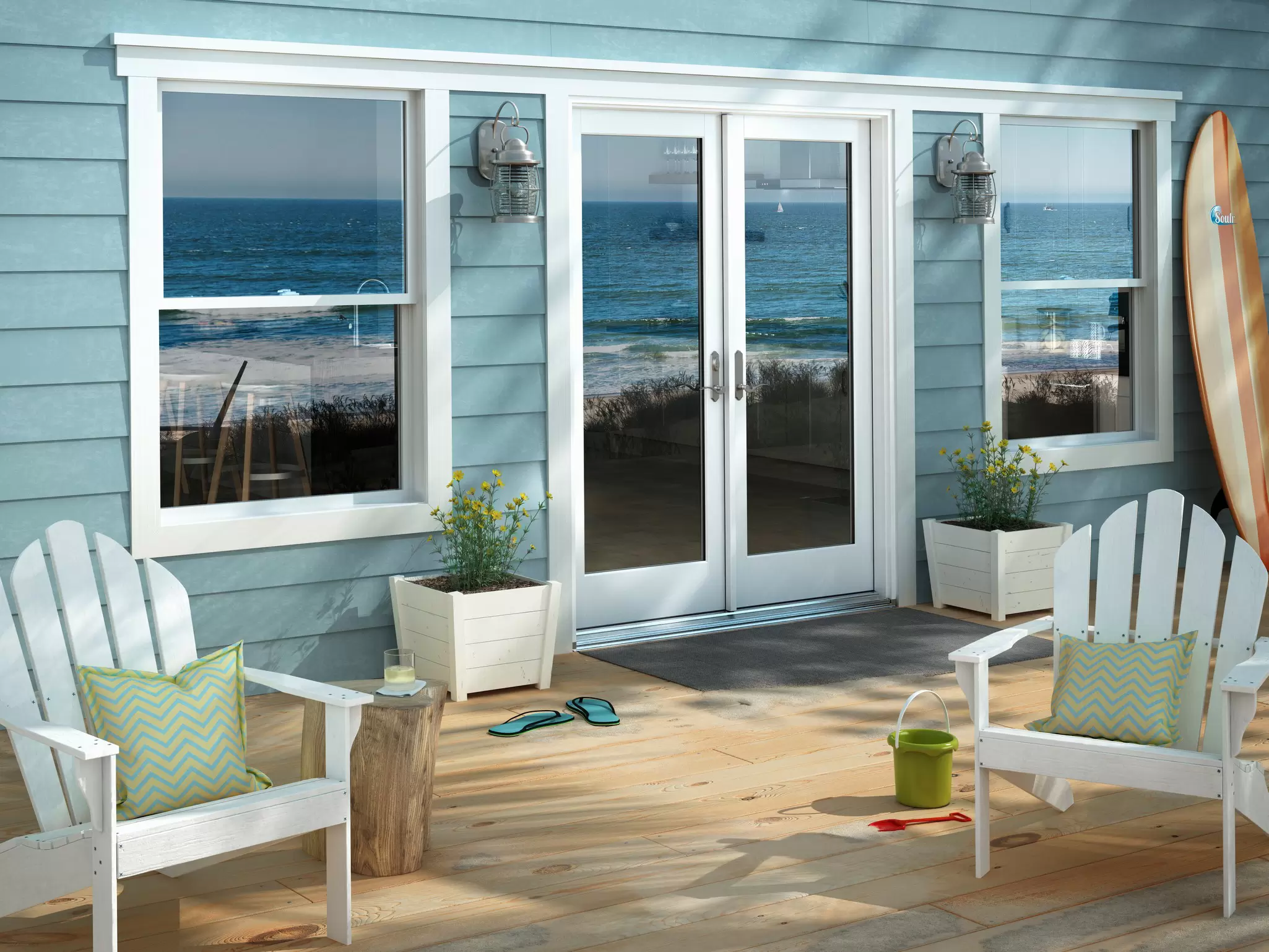
With so many window styles to choose from, finding the right fit for every room in your home is easier with an experienced local team in your corner. At Window World of Gulf Coast, we carry a full range of window styles – casement, double-hung, sliding, picture, awning, and more – so you’re never limited to a one-size-fits-all solution.
Our design consultants will help you think through the best option for each opening in your home, balancing ventilation, natural light, energy efficiency, and budget to put together a replacement plan that makes sense for how you actually live. And with professional installation backed by industry-leading warranties, you can count on your new windows to perform beautifully for years to come.
Ready to explore your options? Contact Window World of Gulf Coast today to schedule your free in-home consultation and find the perfect window style for every room in your home.


